
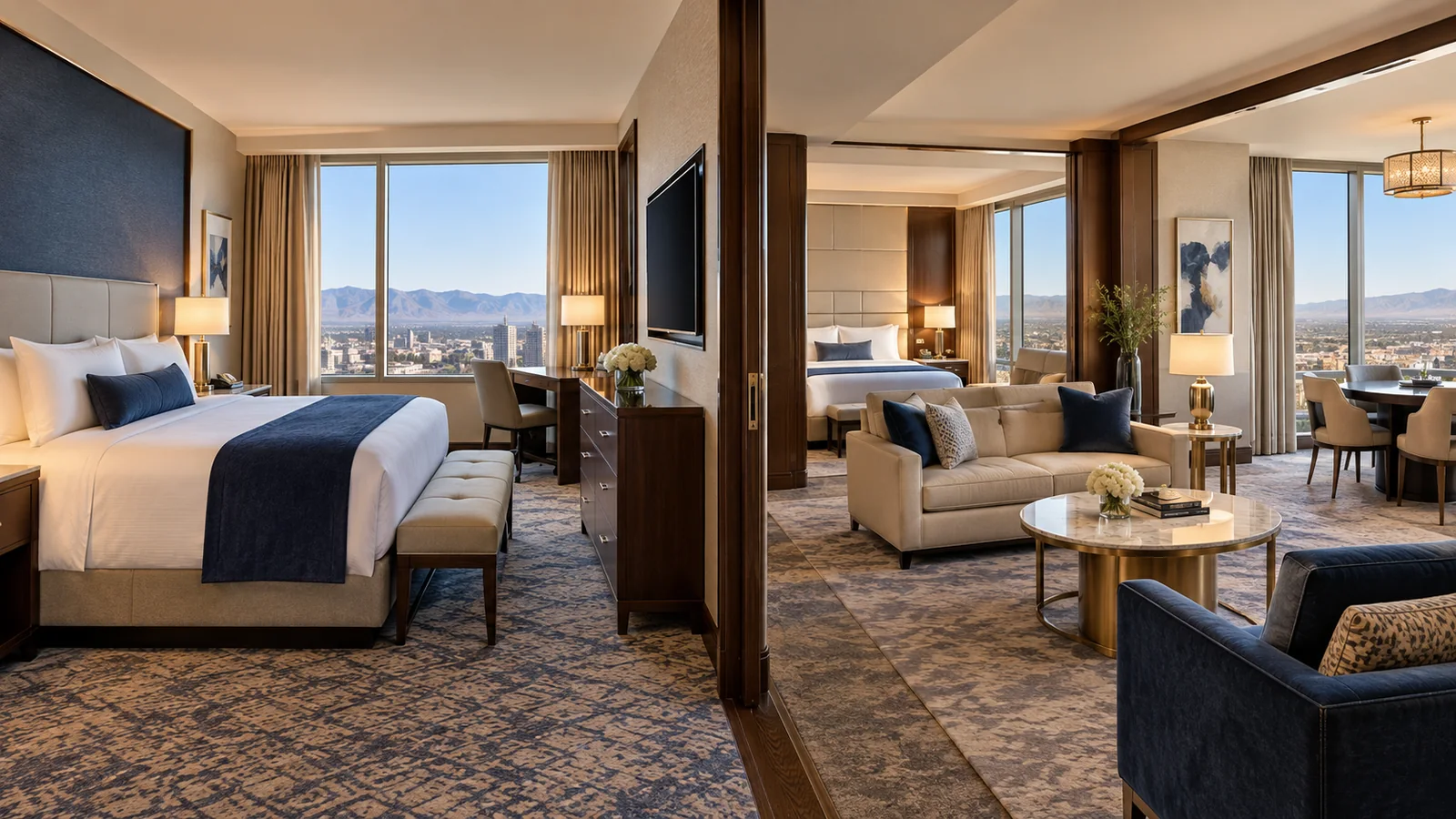
Casino hotels often combine accommodation with restaurants, bars, shows, gaming, conferences and late-night activity. That convenience can also create more potential noise than a conventional hotel, particularly around lifts, entertainment venues, pool decks and busy arrival areas.
No room request can guarantee silence, but understanding the building and asking specific questions is more effective than requesting a generic quiet room.
Identify the likely noise sources
Noise may come from nightlife, live music, outdoor pools, loading areas, roads, aircraft, lifts, ice machines, connecting doors or neighboring rooms. Event spaces can create short periods of heavy corridor traffic even when the room is far from the casino floor.
Study the property map and current event schedule where available. A room facing away from a concert venue may still overlook a service road, while a high floor can reduce street noise but remain close to a rooftop bar.
Ask for a location, not only a quiet room
A useful request describes the problem you want to avoid: away from lifts and vending areas, not connecting, distant from nightlife, or facing away from a pool deck. Hotel staff can respond more accurately when the preference is specific.
Requests are generally subject to availability unless a particular room type or feature is confirmed in the reservation. Contact the property before arrival and ask again politely at check-in.
Understand towers and room categories
Large resorts may have several towers built at different times and positioned near different facilities. The shortest route to entertainment may not be the best location for sleep, and the newest tower is not automatically the quietest.
Compare the actual room category and tower named in the booking. A view room can face a busy attraction, and a suite may include a connecting door or sit near service areas. Ask the hotel which category best matches your noise preference.
Consider the day and event calendar
Weekends, holidays, conventions and major shows can change the atmosphere of a property. Higher occupancy produces more hallway movement and longer waits even when entertainment ends at a reasonable time.
If sleep is a priority and dates are flexible, compare midweek periods and check major local events. Remember that maintenance or renovation can also create daytime noise, so ask about current work before booking.
Prepare practical sleep safeguards
Earplugs or comfortable noise-reducing headphones take little luggage space. A white-noise app can help with intermittent corridor sound, although alarms and emergency announcements must remain audible.
If noise is severe, report it promptly rather than waiting until checkout. The hotel may be able to address the source or move the room, but alternatives become harder to find late at night when occupancy is high.
Balance quiet with accessibility and convenience
The most distant room may involve long walks through a large resort. Travelers with mobility requirements may reasonably prefer proximity to lifts even if that creates some additional activity.
Prioritize essential accessibility needs first, then ask the hotel for the quietest option within those constraints. A practical room is one that supports both rest and safe movement through the property.
Frequently Asked Questions
Is a high floor always quieter?
No. It may reduce traffic noise but could be closer to rooftop venues, mechanical equipment or busy lift areas.
Can a hotel guarantee a quiet room?
Usually not unless a specific room feature is sold and confirmed. Clear requests can improve the chance of a suitable assignment.
Are connecting rooms noisier?
Sound can travel more easily through a connecting door, although construction and neighboring guests also matter.
When should I report a noise problem?
Contact the front desk while the issue is happening so staff have an opportunity to investigate or offer an alternative.
Continue your research
Browse casino hotels by country, compare hotel facilities, or explore our editorial collections.